Choice International Shade (CI Shade) - the Gulf Region's leading experts in high-quality tensile and structural shading solutions. Based in Saudi Arabia and Bahrain.
Loading
Choice International Shade (CI Shade) - the Gulf Region's leading experts in high-quality tensile and structural shading solutions. Based in Saudi Arabia and Bahrain.
If you need an hdpe fabric supplier in Qatif, you probably want material that can handle strong sun, dust, and the salt-heavy air near the Eastern Province coast. HDPE fabric is a practical choice for privacy fence shades, wall screens, and lightweight shade applications where airflow matters as much as cover. It helps reduce glare, gives cleaner visual screening, and keeps structures from feeling closed in.
At Choice International Shade, we supply and work with HDPE fabric for projects across Saudi Arabia and Bahrain, including sites that face harsh summer heat and constant exposure. Our team understands how fabric choice affects the finished structure, from the way it looks on day one to how it holds up after months of wind, UV, and everyday use. If you're comparing materials for a school, villa, industrial yard, or commercial boundary, this page gives you the practical points that matter.
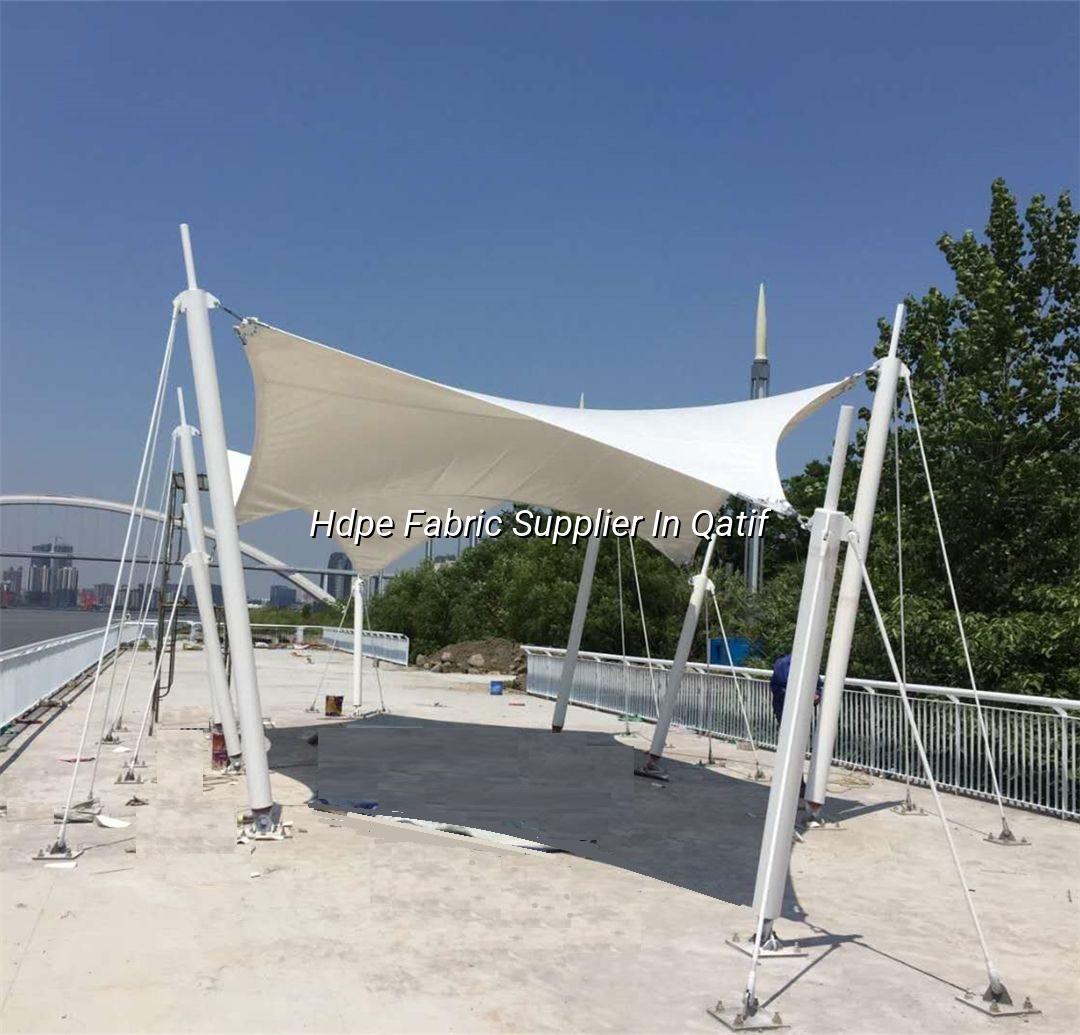
HDPE fabric is popular in Qatif because it balances shade, ventilation, and visual screening without the weight of a fully solid barrier. That matters in Gulf weather. Air movement reduces pressure on the fabric, while the open weave helps the area feel cooler and less trapped under direct sun. For privacy fence shades and screening walls, it also gives a neat finish that works well around residential compounds, schools, labour areas, and commercial yards.
In our experience, the fabric choice is often decided by the site itself. A project closer to the coast needs materials that cope with UV intensity, dust abrasion, and the kind of salt exposure you get in Eastern Province and Bahrain. HDPE fabric is a sensible option for those settings because it is light, breathable, and suited to screening where full blackout isn't needed. It can also be used where the client wants privacy without creating a wind trap.
We don't treat HDPE as a generic supply item. The right specification depends on the structure, the fixing points, and the job the fabric has to do. For example, a privacy fence shade for a school boundary needs a different finish from a screen on an industrial yard or a walkway enclosure. Our design and engineering team looks at the frame, spans, and exposure conditions first, then we match the fabric to the project.
The strongest demand for HDPE fabric usually comes from places that need visibility control and air permeability at the same time. Around Qatif, Dammam, Dhahran, Jubail, and nearby areas, we see it used on boundary screens, service yards, outdoor rest areas, and selected shade features for schools and housing developments. It is also a practical option for projects that need a tidy appearance without a heavy architectural feel.
We work with 100% monofilament HDPE yarn for projects that need cleaner tension, good visibility control, and stable performance in outdoor conditions. It suits privacy fence shades especially well because the fabric is light but still purposeful.
The same fabric can perform very differently depending on how it is attached. We consider edge detailing, frame type, tensioning method, and exposure to wind before we recommend the final build, so the finished result feels intentional rather than improvised.
Most clients want a straight answer: which fabric suits the site, how it will be fixed, and what the finished screen will look like. We start with the real conditions on the ground and work from there.
When people ask for HDPE fabric, they usually mean a breathable shade or fence screen that offers privacy without turning into a sail. The material class matters, but so does how it is made and fitted. At CI Shade, we also look at the wider system: frame steelwork, edge reinforcement, and the way the product sits against wind and sun over time. For projects with stricter requirements, we can compare HDPE against PVC coated fabric, PVDF coated fabric, PTFE fabric, ETFE film, and acrylic fabric so the client can choose the right material for the location.
| Material | Main Strength | Best Fit in Gulf Projects |
|---|---|---|
| HDPE fabric | Breathable screening with good privacy control | Privacy fence shades, boundary screens, lighter shade walls |
| PVC coated fabric | Strong all-round shade fabric with broad application use | Tensile shades, canopies, car parks, and entrance covers |
| PVDF coated fabric | Improved surface performance for demanding outdoor exposure | Projects needing a cleaner finish and tougher weather resistance |
| PTFE fabric | High-performance membrane option for specialist structures | Architectural shade and landmark tensile works |
| ETFE film | Lightweight film used in advanced glazing and cushion systems | Specialist enclosure and roof feature applications |
A good-looking sample is only part of the story. You should look at UV exposure, airflow, edge finishing, and how the screen will behave in wind. In hot coastal areas, a material that traps heat or dirt can become difficult to live with, so we always think about cleaning access and day-to-day use as well. If the fabric is being used on a privacy fence shade, the frame spacing and fixing method are just as important as the cloth itself.
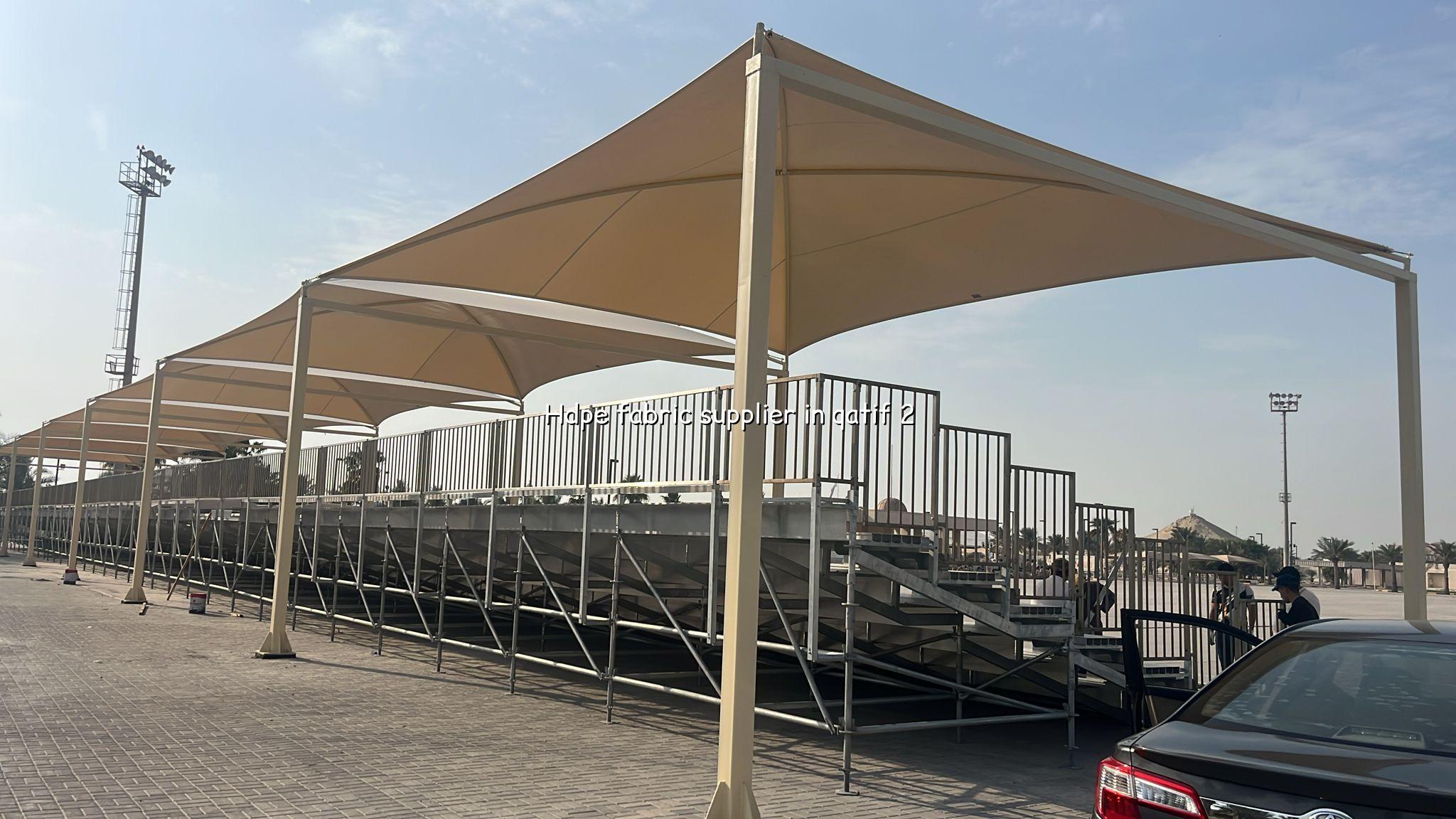
If you're searching for an hdpe fabric supplier in Qatif, we can help you choose the right material and turn it into a proper installed solution. Our team covers design and engineering, manufacturing, installation, and maintenance, so you don't have to manage separate contractors for the different stages. We also handle steel contracting where the project needs a new frame, canopy support, or structural work.
Call +966 56 418 7590, message us on WhatsApp, or email info@choiceshade.com to talk through your project.
Here are the questions we hear most often from clients looking for HDPE screening and privacy fabric in Qatif and nearby cities.
If you want a material that suits Gulf weather without overcomplicating the job, HDPE is often a smart place to start. CI Shade can help you match the fabric to the structure, the site, and the look you want.
Talk to our team for practical advice, material guidance, and a quote shaped around your site.
Request A QuoteLet's discuss how we can bring your vision to life with our expert tensile shade solutions.
Contact Us Today