Choice International Shade (CI Shade) - the Gulf Region's leading experts in high-quality tensile and structural shading solutions. Based in Saudi Arabia and Bahrain.
Loading
Choice International Shade (CI Shade) - the Gulf Region's leading experts in high-quality tensile and structural shading solutions. Based in Saudi Arabia and Bahrain.
Fire rated tensile fabric Al Khobar projects need more than a strong canopy skin. They need a fabric that can stand up to heat, glare, dust, salt air, and the real operating conditions of the Eastern Province. If you're planning a car park shade, walkway cover, entrance canopy, or a larger tensile structure, the right fabric choice affects safety, maintenance, and how the project performs year after year.
At Choice International Shade, we work on this subject every day across Al Khobar, Dammam, Dhahran, Bahrain, and wider Saudi Arabia. Our team designs, fabricates, installs, and maintains shaded structures with material selection matched to the site, the structure, and the local climate. That means we look at fire performance, UV resistance, wind exposure, salt corrosion around the coast, and the way the fabric will be used in practice.
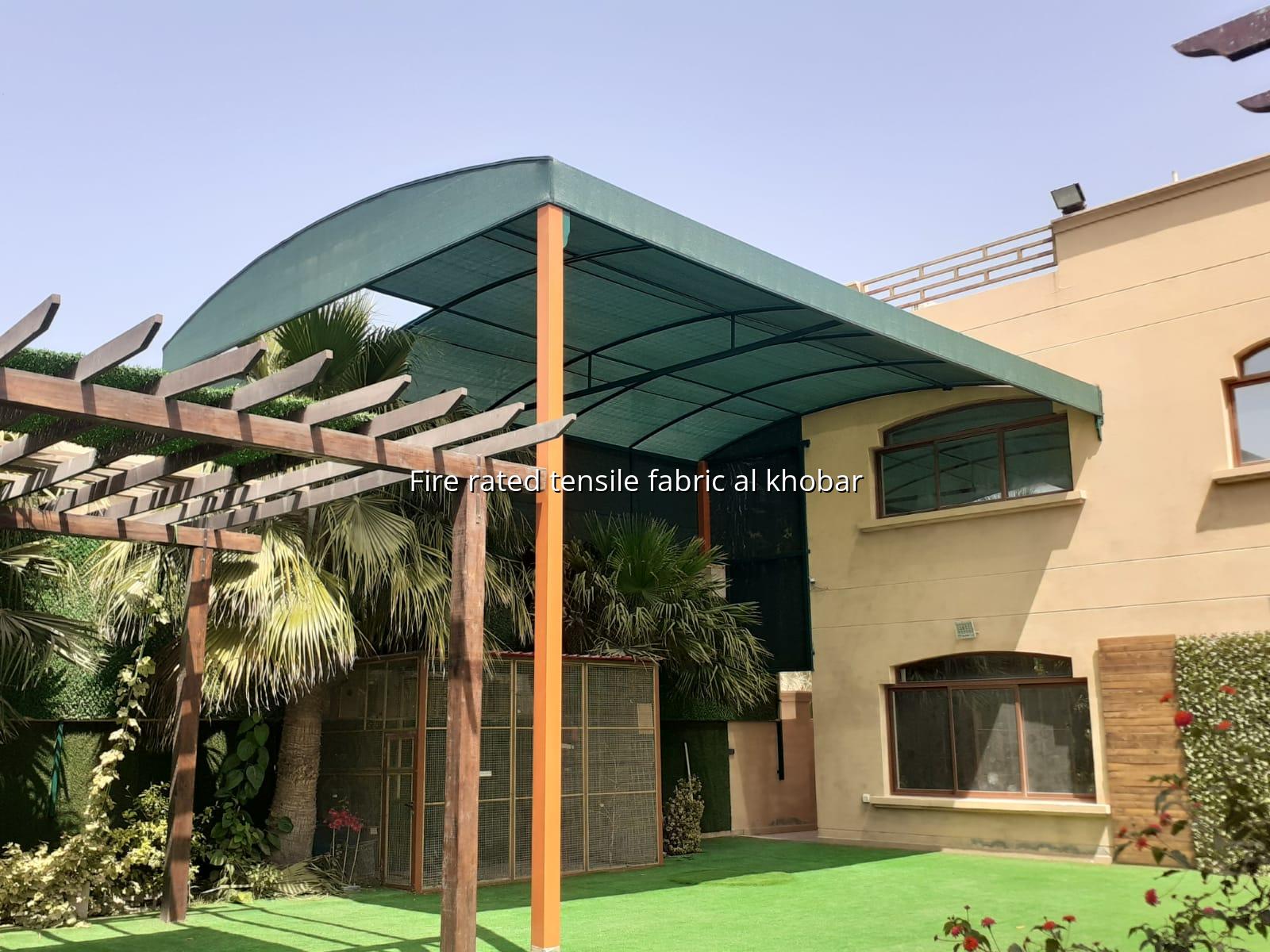
In our climate, a shade membrane is not just a visual feature. It sits under harsh sun for long hours, gets hit by airborne dust, and in coastal areas like Al Khobar and Bahrain it also faces salt exposure. A fabric that performs well on paper but ages badly in the field becomes a maintenance problem quickly. Fire rated tensile fabric gives you a better starting point because you're specifying a material that has been selected with safety expectations and demanding site conditions in mind.
The Gulf has a way of exposing weak materials. On exposed roofs and car park shades, low-grade fabric can lose tension, fade unevenly, or show early surface wear. We usually guide clients towards coated fabrics or engineered membranes that suit the structure type and the location. For sites near the sea, the frame and fixings matter just as much, because the fabric is only one part of the system.
A tensile membrane works properly only when the structure, patterning, supports, and anchors are all calculated together. We prepare concept designs, structural engineering, CAD and SolidWorks detailing, then move into fabrication once the shape and loading are agreed. That process gives you a membrane that fits correctly, sheds water as intended, and handles the wind conditions common across the Eastern Province and Bahrain.
Most enquiries we receive for fire rated tensile fabric Al Khobar projects come from commercial and public sites, but residential and industrial clients ask for it too. The common uses are practical, not decorative. People want protection, a cleaner site, and a structure that keeps its appearance in the sun.
We don't treat every project the same. Some sites suit PVC coated fabric, others need PVDF coated fabric for a cleaner finish and improved weathering behaviour, while certain applications may call for HDPE, PTFE, or ETFE systems. The right answer depends on the structure, the budget envelope, the appearance you're aiming for, and how much exposure the fabric will face.
A fire rated membrane is only one part of safe delivery. Our team also looks at steel detailing, fixing points, access for maintenance, and supervised installation by our own crews. That way the finished structure does what it should on site, not just on a drawing.
We start with the site conditions and work towards the structure. That keeps the conversation practical and helps avoid costly rework later.
Clients often ask what separates one membrane from another. The honest answer is that the best fabric depends on the brief. For example, PVC coated fabric is widely used for tensile shading because it offers good versatility, while PVDF coated fabric is often chosen where a cleaner surface and better long-term weathering are useful. HDPE fabric has its place too, especially in privacy fence shades and lighter shading applications. PTFE, ETFE, and acrylic each have their own project uses, but they are selected for specific design and performance requirements rather than because they sound premium.
| Fabric Type | Typical Project Use | Practical Benefit in Gulf Conditions |
|---|---|---|
| PVC coated fabric | Car parks, walkways, entrance canopies | Flexible for many tensile forms and widely used for shade structures |
| PVDF coated fabric | Architectural shades, visible public areas | Helps with surface weathering and easier cleaning over time |
| HDPE fabric | Privacy fence shades, lighter shade screens | Suitable for breathable screening and wall fence applications |
| PTFE fabric | Specialist tensile roofs and landmark structures | Used where higher-performance membrane solutions are required |
| ETFE film | Advanced roof and cushion systems | Supports very specialised translucent architectural designs |
A membrane that's left without inspection can collect dust, show stains, or suffer from tension issues around fixings and edges. In the Eastern Province, wind and sand can also affect surface condition more quickly than many owners expect. Our maintenance service covers inspection, repair, cleaning, and aftercare so the structure stays presentable and fit for use.
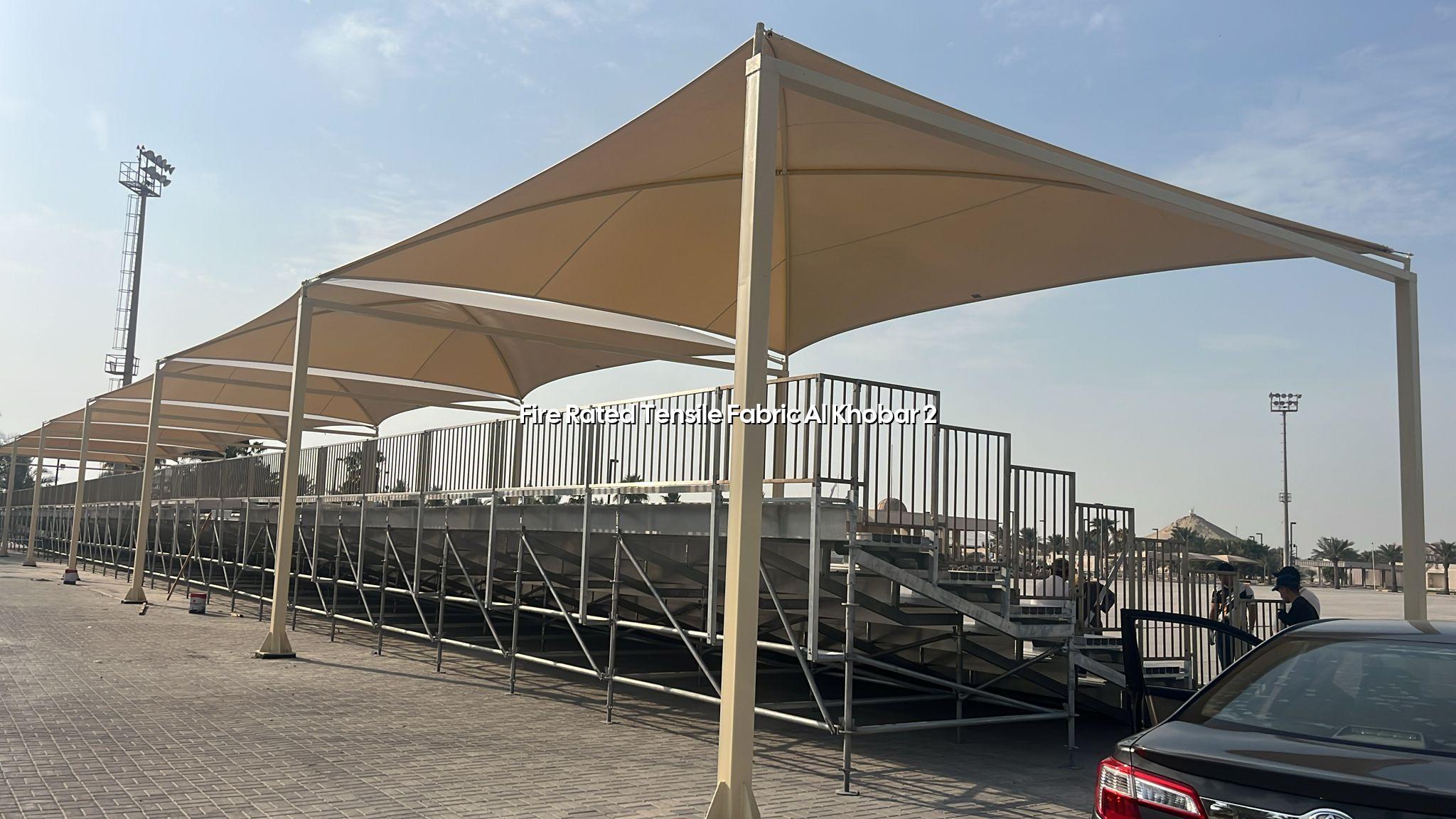
We handle fire rated tensile fabric Al Khobar projects from the first sketch through to final installation and maintenance. Our services cover design & engineering, project management, manufacturing in our 8,000 m² production facility, supervised installation, and aftercare. If you need a fabric specification for a car park, canopy, walkway, or a larger structural shade, we'll help you choose a solution that fits the site and the Gulf climate.
Call +966 56 418 7590, message us on WhatsApp, or email info@choiceshade.com to talk through your project.
Here are the questions we get most often from clients planning a tensile shade in Al Khobar or nearby cities.
If you're comparing membrane options for an Al Khobar project, start with the site conditions and the end use. Once those are clear, the right fabric choice usually becomes obvious, and the rest of the project can be planned properly.
Contact our team today for a practical recommendation, site review, and quote request for your shade structure in Saudi Arabia or Bahrain.
Request A QuoteLet's discuss how we can bring your vision to life with our expert tensile shade solutions.
Contact Us Today